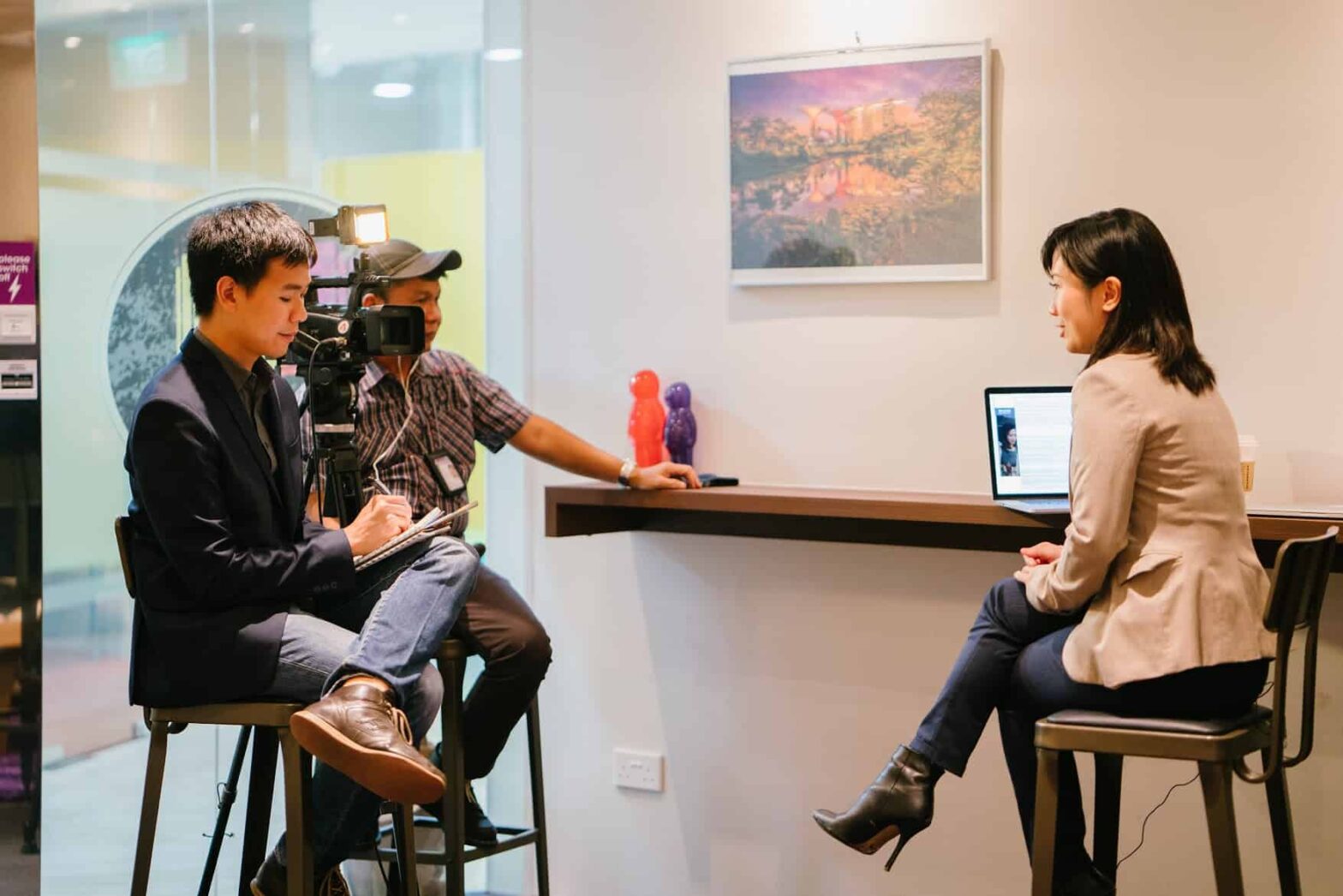
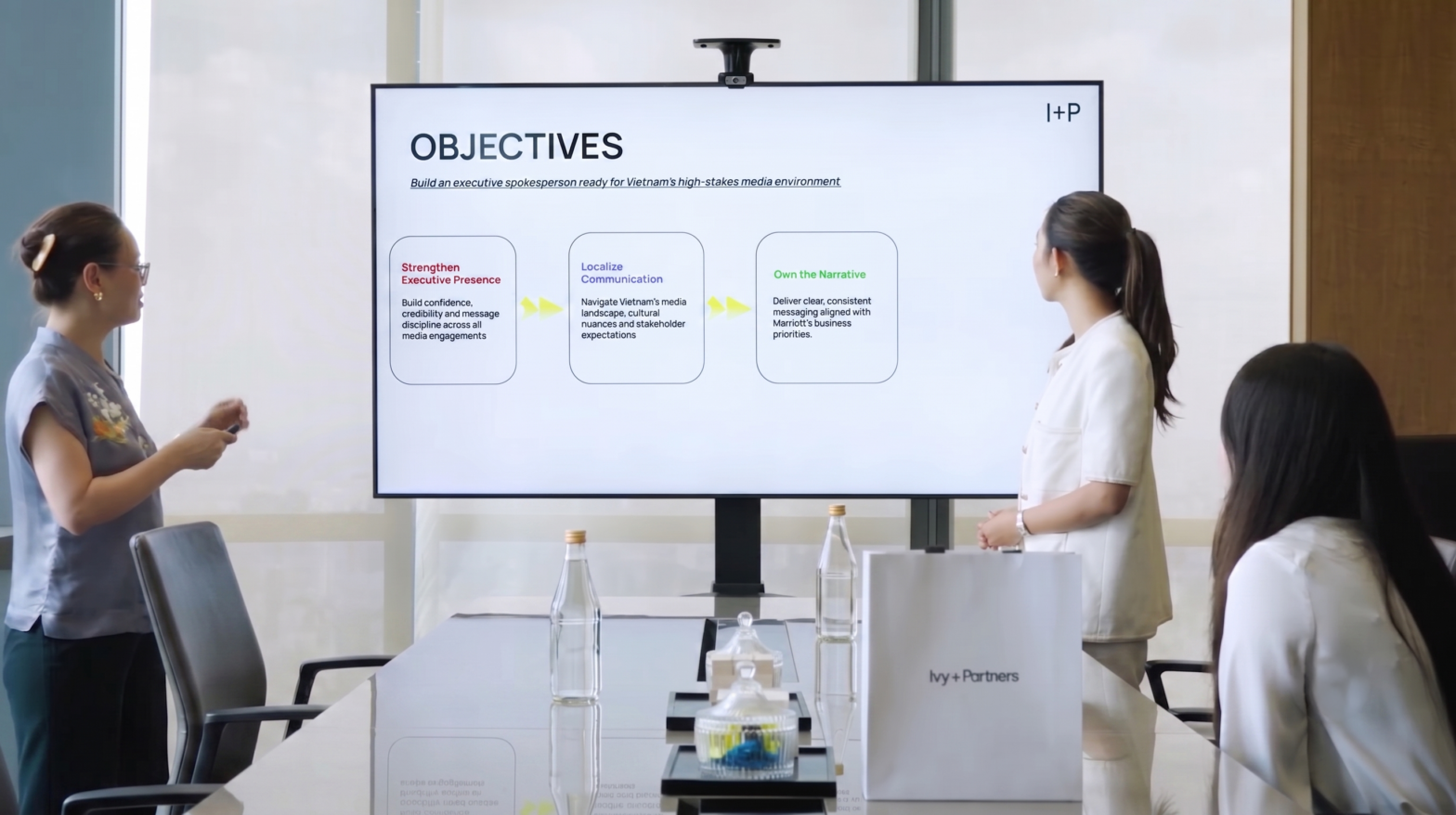
For senior leaders, a media interview is no longer simply a conversation with a journalist. In Vietnam’s rapidly evolving media landscape, a single interview can travel across newsrooms, social platforms, video, podcasts and AI-powered search – reaching audiences far beyond the original conversation.
For leaders representing multinational companies in Vietnam, this creates a new challenge: how to communicate with clarity and credibility when the context around their words is faster, more fragmented and harder to control.
What Vietnam’s Changing Media Landscape Means for Leaders
Vietnam’s media environment is undergoing significant structural change alongside the continued shift from traditional media to digital and increasingly AI-mediated information discovery.
Government-led restructuring is reshaping Vietnam’s press system, with fewer and more consolidated press agencies, the reorganisation of print and digital publications, and the streamlining of broadcast media operations. By the end of 2025, the restructuring process had resulted in 778 press agencies nationwide.
For executives and communications teams, however, the important question is not simply what is changing in the media landscape, but what these changes mean for how leaders communicate.
01. One Interview, Many Channels
An executive’s words can travel far beyond the original outlet – across news, social, video, podcasts and search. A message therefore needs to remain clear and credible, wherever and however it reaches the audience.
02. More Fragmented Audiences
Audiences increasingly consume information across different platforms and formats, often encountering the same message in very different contexts. Leaders need to communicate ideas that can work across news, social, video and search – without losing the core message.
03. Less Control Over Context
Quotes can be shortened, translated, clipped, reposted or reframed after the interview. Executives need to consider not only what they say, but how those words may be understood beyond the original conversation.
04. Higher Expectations of Senior Spokespeople
Senior leaders are expected to communicate with authority and authenticity – without sounding overly scripted. This makes media preparation less about memorising answers and more about building judgment, adaptability and composure.
Together, these shifts make media readiness an increasingly important part of executive communication.
When the Media Environment Changes, the Executive Role Changes With It
The traditional model of media preparation often starts with a straightforward question: What will the journalist ask?
Today, a more useful question is: What do we want the audience to understand and remember – regardless of where the conversation goes?
Senior executives often know their business exceptionally well. The challenge is translating that expertise into communication that is concise enough for media, relevant to the audience, aligned with the organisation’s priorities and appropriately contextualised for Vietnam.
That becomes particularly important for international leaders. A global corporate narrative may be technically accurate, but still fail to resonate locally if it does not account for Vietnamese media conventions, cultural cues or stakeholder expectations.
There is also a fundamental tension between preparation and spontaneity. Executives need to sound natural rather than scripted, but improvisation becomes increasingly risky as their seniority – and the number of stakeholders represented by their words – increases.
The higher the position, the smaller the margin for communication error.
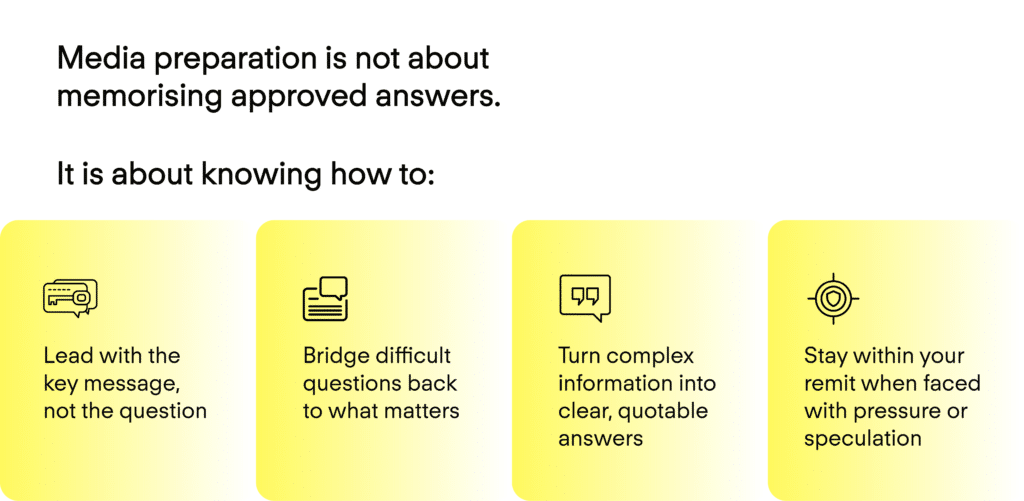
The goal is not to turn leaders into professional broadcasters. It is to help them remain effective when the interview does not go according to plan.
Four Things a Spokesperson Should Be Able to Build
Being media-ready is not about having a perfect answer for every question. It is about having the communication skills to stay clear, relevant and credible when the conversation moves beyond the expected.
01. Message Discipline
Know what matters most and make it memorable.
A strong spokesperson can distil complex ideas into clear messages, reinforce organisational priorities and avoid getting lost in unnecessary detail.
02. Contextual Intelligence
Know how the message may land.
Effective communication requires more than understanding the business. Leaders need to read the media context, cultural cues, audience expectations and boundaries of their own role — particularly when translating global narratives for Vietnam.
03. Composure Under Pressure
Stay in control when the question changes.
Unexpected premises, difficult questions and requests for speculation can quickly pull a spokesperson away from their intended message. The ability to pause, reframe and respond constructively is critical.
04. Executive Presence
Make credibility visible and felt.
Tone, pace, posture, eye contact, facial expression and conversational control all shape how a leader is perceived – often before the audience has fully processed what they are saying.
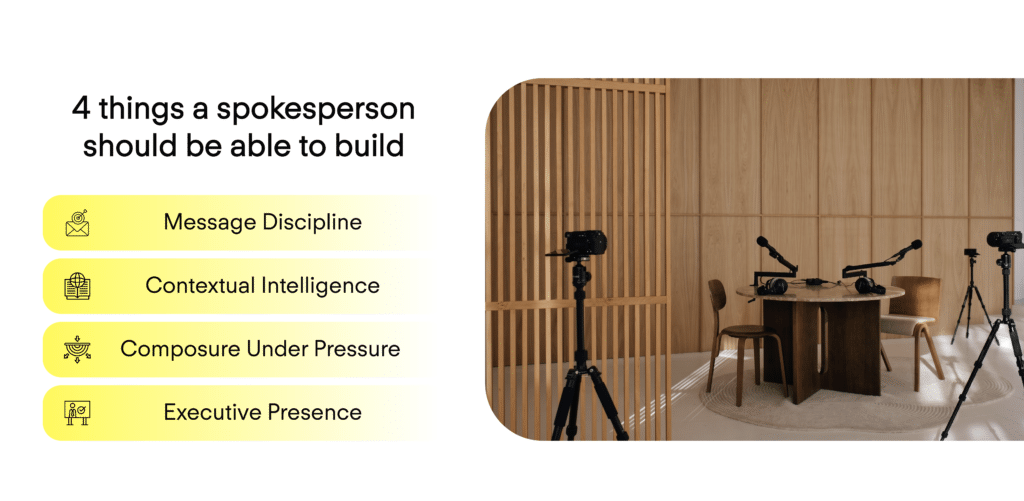
Together, these capabilities help leaders move beyond simply answering questions to leading the conversation.
From Media Training to Leadership Readiness
The changing media environment also changes what organisations should expect from their spokespeople.
An executive interview now has multiple audiences beyond the journalist: customers, employees, partners, investors, owners, regulators and the wider public. A statement that appears straightforward in the room can acquire a very different life once it is quoted, translated, clipped, reposted or summarised elsewhere.
AI adds another layer to this information lifecycle. As search and discovery increasingly incorporate generative systems, the distance between an executive’s original words and the way those words are eventually encountered by an audience can become even greater.
That is why media training should be considered part of reputation readiness and leadership development, rather than simply a PR exercise.
The strongest spokespersons do not merely survive difficult questions. They create clarity where others might create ambiguity, bring local context to global narratives, and remain credible when the conversation moves beyond their prepared talking points.
Signs Your Spokespeople May Need Media Training
Media training is not only relevant when a spokesperson has an important interview coming up. It becomes particularly valuable when there is a gap between what a spokesperson knows, what they intend to communicate and how that message actually comes across.
Here are some signs that your spokesperson may benefit from more structured media preparation:
- Knows the business well, but struggles to turn complex information into clear, concise messages – or answer questions without losing the organisation’s key message.
- Relies on corporate language, technical terminology or global talking points that do not fully resonate with Vietnamese audiences or account for local media and cultural context.
- Loses clarity, confidence or composure when faced with challenging questions, unexpected premises or requests for speculation.
- Performs well in prepared conversations but becomes less confident in spontaneous formats – from live interviews and panels to podcasts and social content.
- Relies heavily on briefing documents and anticipated Q&As, but has limited opportunities to practise, review and refine actual performance.
- Is increasingly appearing in less scripted, more visible formats where tone, body language and conversational habits matter as much as the words themselves.
- Is entering higher-stakes conversations involving business transformation, regulation, reputation, crisis or other sensitive stakeholder issues.
These signals do not necessarily indicate a communication problem. They point to moments when media readiness needs to move beyond briefing documents and into deliberate practice.
Ready for the Conversations That Matter?
Ivy+Partners helps senior leaders and corporate spokespeople build the clarity, confidence and composure to face today’s media environment.
Our tailored media training combines:
- Vietnam-specific media intelligence
- Strategic message development
- Scenario-based questioning & interview simulation
- Video review & personalised coaching
From preparing for an upcoming interview to strengthening your spokesperson bench or navigating a high-stakes conversation, we help turn preparation into media readiness.
Let’s start a conversation with Ivy+Partners!