Luxury in Vietnam is being redefined, not through louder visibility, but through greater precision.
As the market matures, prestige is no longer built by how often a brand appears, but by how deliberately it chooses to engage. Meaning, restraint, and cultural intelligence are increasingly shaping how luxury is perceived and valued.
In this context, PR evolves from amplification to curation, becoming a strategic discipline that designs perception over time.
The Vietnamese Luxury Landscape: A Market in Transition
According to Statista, Vietnam’s luxury market generated most of its revenue in 2023 from premium fragrances and cosmetics, fashion, leather goods, and luxury watches and jewelry, and is expected to reach USD 992.2 million in 2024.
Despite economic challenges, luxury brands continue to expand selectively, supported by a growing affluent population.
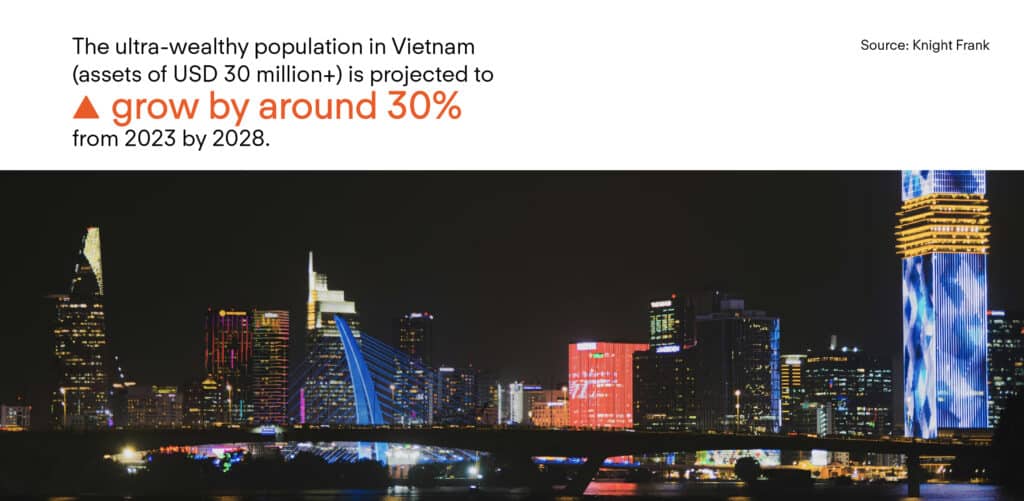
Therefore, Vietnam’s luxury audience is no longer a single, homogeneous group. Alongside established high-net-worth individuals who value heritage, craftsmanship, and discretion, a younger generation of affluent consumers has emerged. This new audience is digitally fluent, experience-driven, and increasingly influential in shaping taste.
Despite their differences, these groups share a common expectation: luxury must feel intentional. They research extensively online, consume editorial content across platforms, and often encounter brands long before stepping into a boutique or booking a stay. Purchase decisions are still frequently completed offline or through private channels, but perception is shaped upstream through storytelling, cultural cues, and credibility.
In this context, PR is no longer a supporting function. It becomes the connective tissue between brand heritage and modern consumption, between global prestige and local relevance.
The Strategic Codes of Luxury PR
Despite changing behaviors and platforms, effective luxury PR continues to rest on three core principles, not as trends, but as foundations.
#01. Desire over urgency
Luxury communication must transcend product features to evoke aspiration, imagination, and emotional depth. Desire is not triggered by discounts or immediacy, but cultivated through narrative consistency, refined aesthetics, and storytelling that unfolds over time. This is why editorial formats and long-form content remain disproportionately powerful in luxury.
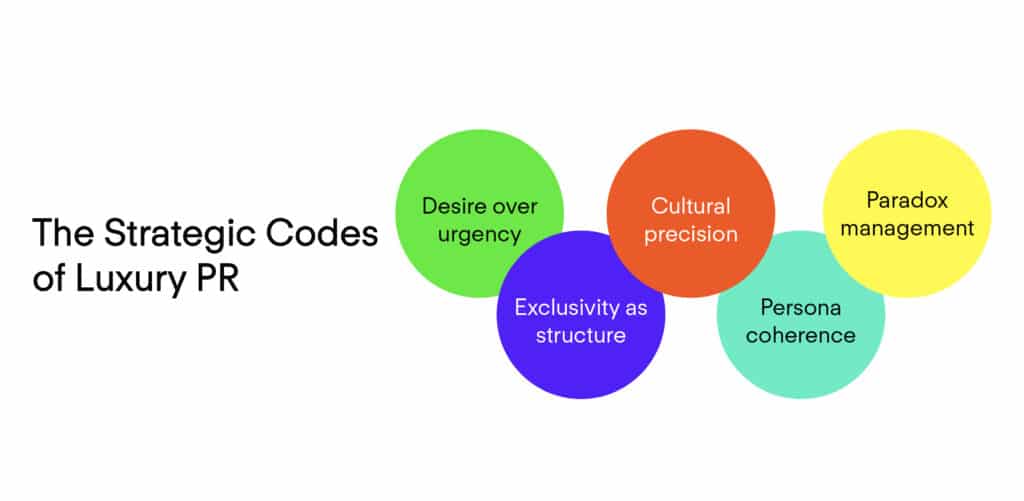
#02. Exclusivity as structure
Exclusivity is not created by being inaccessible, but by being selective. Carefully curated guest lists, invitation-only previews, private appointments, and tiered communication structures are strategic tools that preserve hierarchy. In PR terms, prestige is built by prioritizing quality of exposure over quantity, and depth of engagement over reach.
#03. Cultural precision
Vietnam is not a market where global luxury narratives can be directly translated. Local aesthetics, social rituals, and cultural sensitivities shape how luxury is perceived and evaluated. Brands that demonstrate cultural fluency earn trust quietly; those that do not risk sounding generic, regardless of global stature.
Together, these pillars define luxury PR as a long game, one that rewards patience, restraint, and cultural intelligence.
#04. Paradox management
Luxury thrives on tension. It must expand while remaining rare. It must innovate without appearing trend-driven. It must be visible without seeming promotional. Managing these paradoxes requires restraint.
Rapid expansion, excessive collaborations, or aggressive digital behavior can destabilize symbolic capital. Conversely, over-withdrawal risks irrelevance among younger affluent audiences.
The role of PR is to calibrate this balance to maintain mystique while enabling relevance. In Vietnam’s fast-evolving luxury landscape, this calibration becomes increasingly critical.
#05. Persona coherence
Luxury brands are not collections of campaigns; they are characters with defined identities.
Every touchpoint – media interview, influencer partnership, private event, visual asset – either reinforces or dilutes that persona. Inconsistent tone, opportunistic partnerships, or short-term reactive messaging fragment perception.
Sustained prestige depends on coherence.
When audiences encounter a brand repeatedly across contexts and recognize the same aesthetic codes, behavioral cues, and narrative voice, trust accumulates. In luxury, trust is inseparable from desire.
Executing Luxury PR in Vietnam
In practice, this means rethinking how visibility is pursued.
Media relations favor authority over volume. A single, well-placed editorial feature can deliver more long-term brand equity than dozens of short mentions. Storytelling must be editorial by design, mirroring the standards of premium journalism through immersive narratives and visual restraint.
Influencer strategy follows the same logic. Scale is secondary to alignment. Hyper-selective collaborations with creators who possess genuine expertise generate credibility that mass influencer campaigns cannot replicate. Long-term partnerships allow creators to become authentic extensions of the brand voice.
Experiential PR remains central, but its purpose has shifted. Private dinners, closed-door previews, curated stays, and intimate gatherings are not designed for spectacle, but for memory. Their success is measured in relationships built, not content produced.
The Conclusion
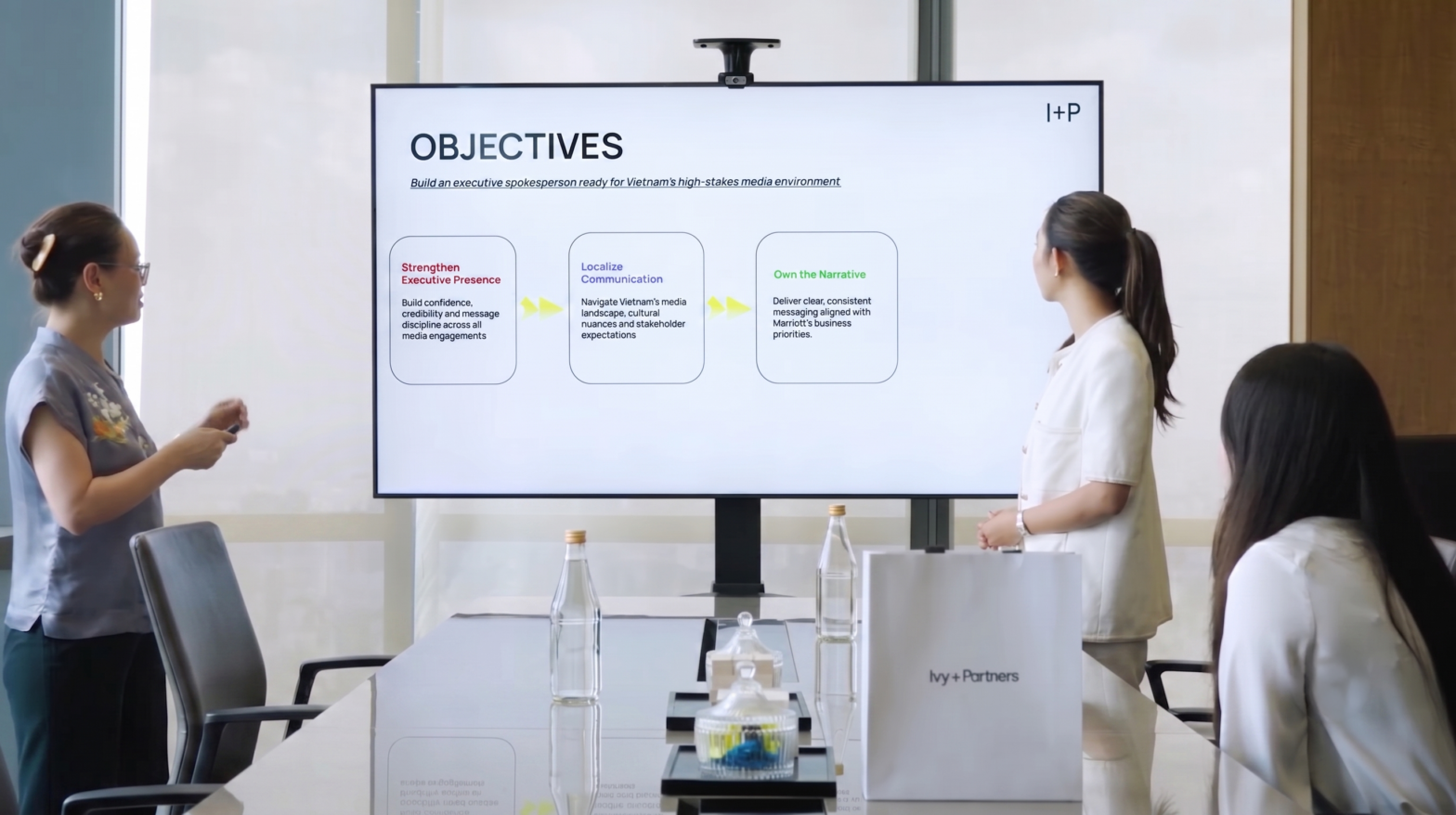
At Ivy+Partners, we work with luxury brands across industries through both long-term partnerships and project-based engagements. We have supported global brands such as Marriott International, Fendi Casa, Armani Beauty, Range Rover… in navigating Vietnam’s cultural context with care.
If your brand is exploring how to build prestige in Vietnam, Ivy+Partners is ready to be part of that conversation.