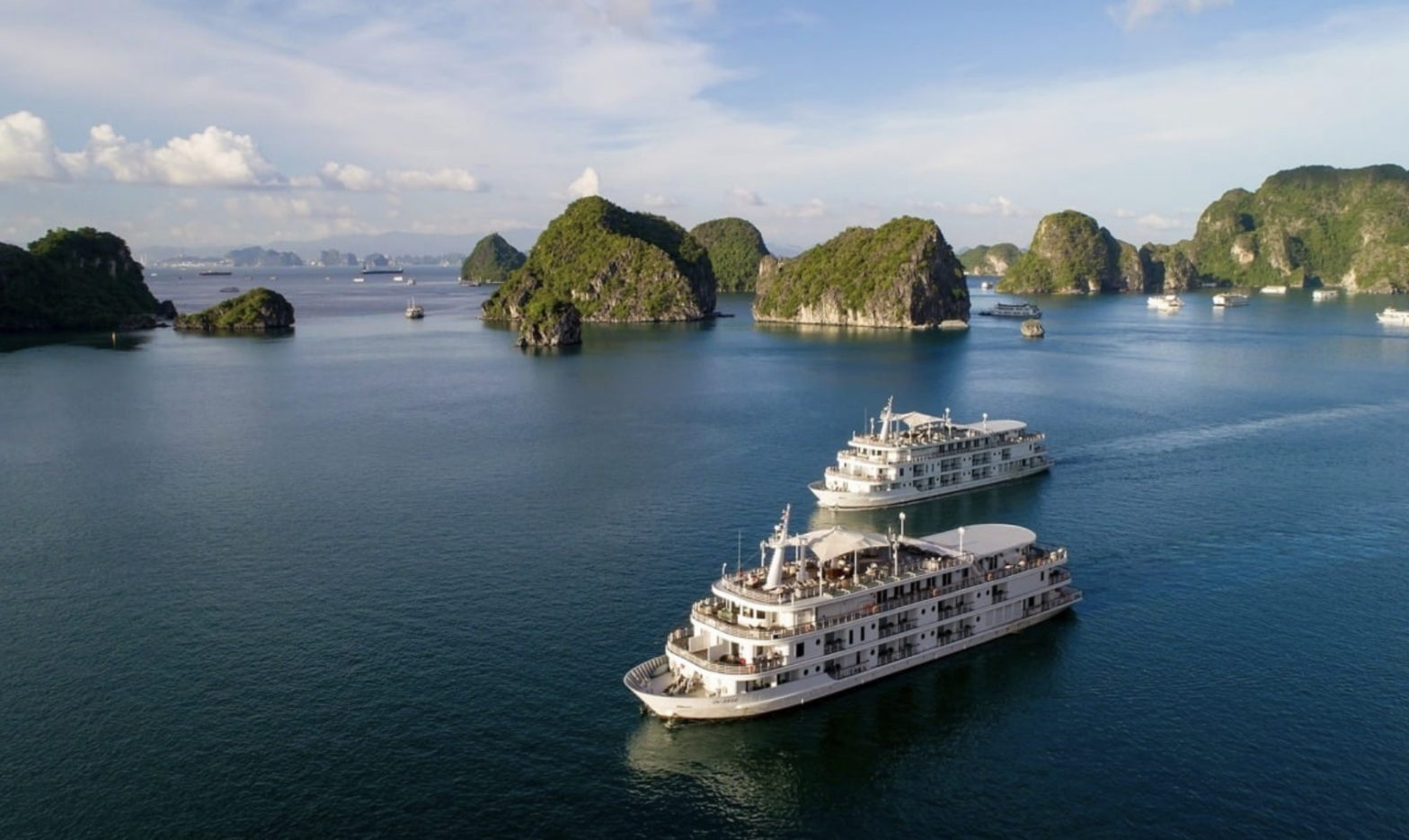
At the national year-end conference of the Ministry of Culture, Sports and Tourism, Prime Minister Phạm Minh Chính identified tourism as one of Vietnam’s strongest-performing economic sectors.
According to the Government News, in 2025, Vietnam welcomed an estimated 22 million international visitors, reflecting growth of more than 25% year-on-year. The country was once again honored as the World’s Leading Heritage Destination at the World Travel Awards for the sixth time.
The numbers are significant. The structural shifts behind them are even more telling.
Global Confidence in Vietnam’s Premium Future
Vietnam’s tourism story was once anchored in affordability. That foundation remains relevant, yet the market narrative has broadened considerably.
Recently, Marriott International is actively accelerated its expansion in Vietnam, introducing new brands and developments across key destinations.
When a global operator of Marriott’s scale deepens its footprint in a market, it does so on the basis of sustained demand, rising spending power, and a maturing hospitality ecosystem. Expansion at this level signals that Vietnam is no longer viewed purely as an emerging destination, but as a strategic growth market within Asia-Pacific.
From a communications perspective, milestones like this help recalibrate international perception. High-profile brand commitments position Vietnam alongside more established luxury markets in the region and reinforce its credibility beyond value-driven tourism.
Beyond the Backpacker Narrative
Vietnam’s identity today spans far wider than its backpacker roots.
Luxury coastal developments in Phu Quoc and Da Nang continue to scale. Culinary recognition has elevated the country’s global standing. Branded residences, wellness retreats, and lifestyle hotels are expanding rapidly.
The traveler mix now includes cultural explorers, regional affluent visitors, digital nomads, and high-spending families seeking curated experiences.
The market conversation increasingly centers on quality, differentiation, and experiential value.
Smart Travel and the Experience Economy
Digitalization is accelerating this transformation.
Vietnam’s tourism ecosystem has embraced smart travel behavior – mobile-first booking, data-led personalization, and seamless platform integration. Consumer decision-making has become more informed and more experience-driven.
In an interview we coordinated between Mr. Nam Nguyen, Country General Manager at Trip.com and Znews, key performance indicators highlighted this momentum:
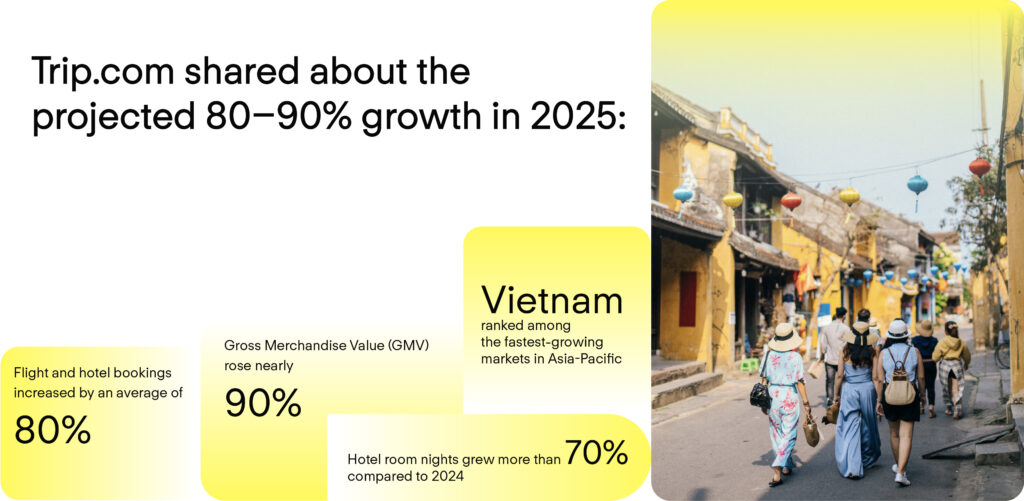
Equally notable is the behavioral shift beneath these figures. Premium hotel segments and international routes now serve as primary growth drivers. Vietnamese travelers increasingly prioritize experience, comfort, and brand credibility alongside cost considerations.
Such shifts require a more nuanced communications approach.
The Communications Imperative
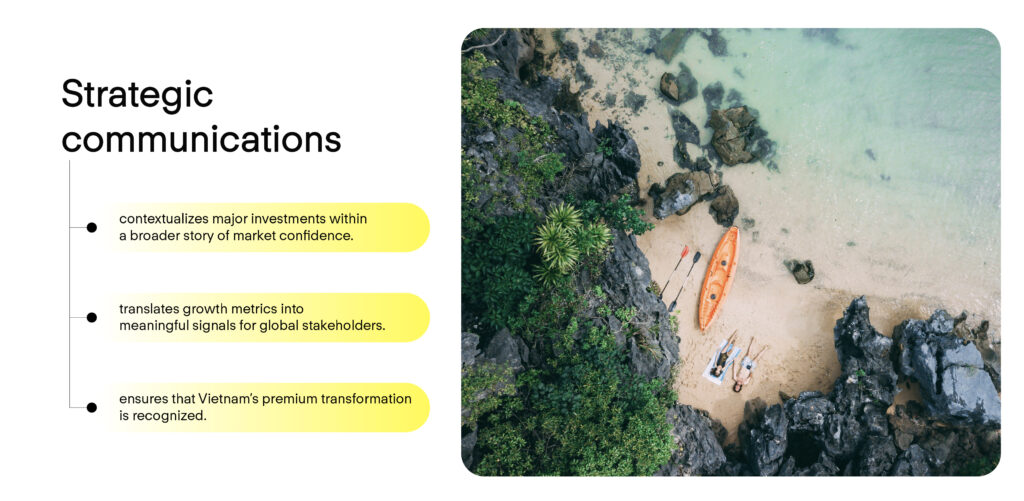
As Vietnam’s tourism market matures, messaging must evolve accordingly.
A luxury resort brand operates within a different aspirational landscape than a select-service urban hotel. Each requires clarity of positioning, disciplined segmentation, and narrative precision.
International perception does not automatically adjust to market realities. Infrastructure development and brand investment move quickly, reputation evolves more gradually.
A Defining Moment for Vietnam’s Tourism Identity
Vietnam stands at a pivotal juncture. International recognition strengthens credibility. Digital platforms amplify reach. Domestic and outbound travel demand fuels ecosystem growth.
As the country aims for 25 million international arrivals in 2026 and further solidifies tourism as a spearhead economic sector, positioning becomes increasingly strategic.
Growth at this pace requires narrative coherence. Clear messaging strengthens investor confidence, supports brand differentiation, and reinforces Vietnam’s standing in the regional competitive landscape.
Vietnam’s tourism boom reflects confidence from travelers, investors, and global operators alike. The next stage of its trajectory will depend on how effectively that confidence is articulated to the world.
With disciplined, forward-looking communications, Vietnam’s ambitions for 2026 appear not only realistic, but aligned with the momentum already underway.
The Conclusion
Vietnam’s tourism sector is evolving rapidly, driven by rising international arrivals, growing luxury developments, and stronger investment from global hospitality brands.
As traveler expectations shift toward premium and experience-driven journeys, clear and strategic communications become increasingly important in shaping how Vietnam’s tourism story is understood globally.
At Ivy+Partners, we help travel and hospitality brands articulate their role in Vietnam’s evolving tourism story.