

One Asia Communications (OAC), an alliance of independent public relations and marketing firms across the Asia-Pacific region, has released the “AI Adoption Among PR Professionals in Asia 2025” white paper. The report was unveiled at the OAC Regional Communication Forum 2025 in Bangkok, Thailand, represented the perspective on how AI is transforming communications across Asia’s diverse markets.
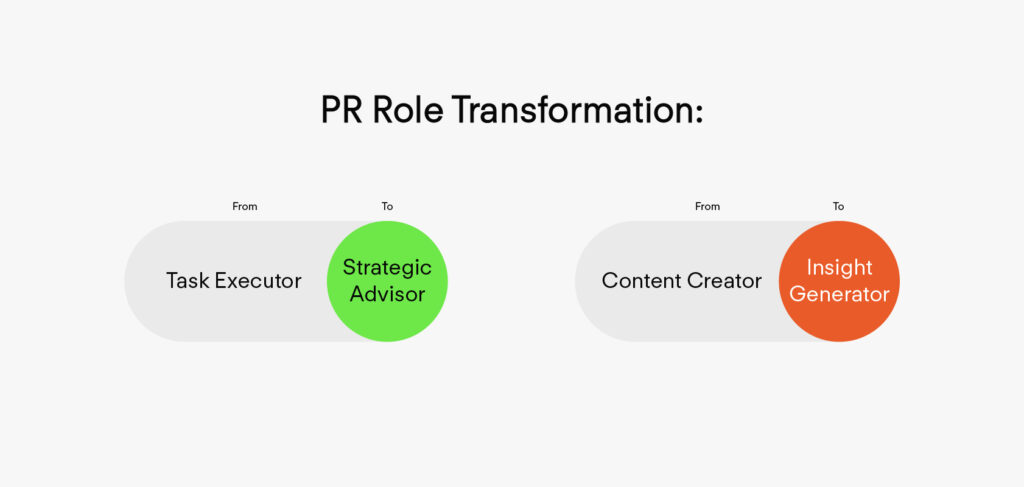
The comprehensive survey gathered insights from nearly 300 experienced communications practitioners across 12 Asian markets: China, Japan, South Korea, Taiwan, Hong Kong, India, Indonesia, Philippines, Vietnam, Thailand, Malaysia, Cambodia and Singapore. The research reveals a profession that is adapting to AI with strategic optimism, embracing technology while maintaining a clear-eyed view of the governance, ethics, and human oversight required to use it responsibly. The findings demonstrate a significant shift: Asian PR professionals are transitioning from hands-on, execution-focused roles toward strategic positions centered on building trust, knowledge, and meaningful connections.
The English version of the research report can be downloaded free of charge here.
The optimism factor: AI as amplifier, not replacement
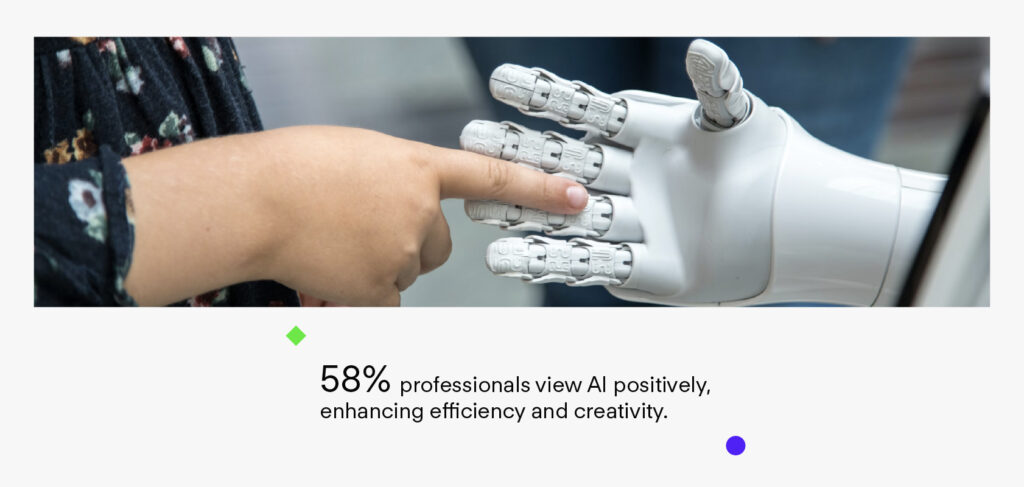
Contrary to widespread narratives about job displacement, 58% of respondents view AI positively, seeing it as enhancing efficiency, creativity, and analytical capability. This represents a significant shift in professional sentiment, particularly across diverse Asian markets where digital maturity varies considerably.
The research shows that AI is a complement to human expertise rather than a competitor. Markets like Indonesia and Vietnam demonstrate particularly strong enthusiasm, viewing AI as a driver of productivity and innovation. This positions Vietnam among the regional leaders in AI adoption optimism, reflecting the country’s rapidly evolving digital landscape and openness to technological transformation. Meanwhile, more mature economies such as Japan and South Korea exhibit greater caution, focusing on governance, risk management, and long-term stability over rapid experimentation.
The reality check: Uneven adoption patterns
While optimism runs high, implementation remains inconsistent. Over half of respondents report being “proficient” in AI tools, but integration varies based on organizational readiness, resources, and leadership support.
Current AI applications focus primarily on three areas:
- Content development and editing: refining and enhancing written materials
- Trend and sentiment analysis: tracking public conversations and brand perception
- Performance measurement: evaluating campaign effectiveness
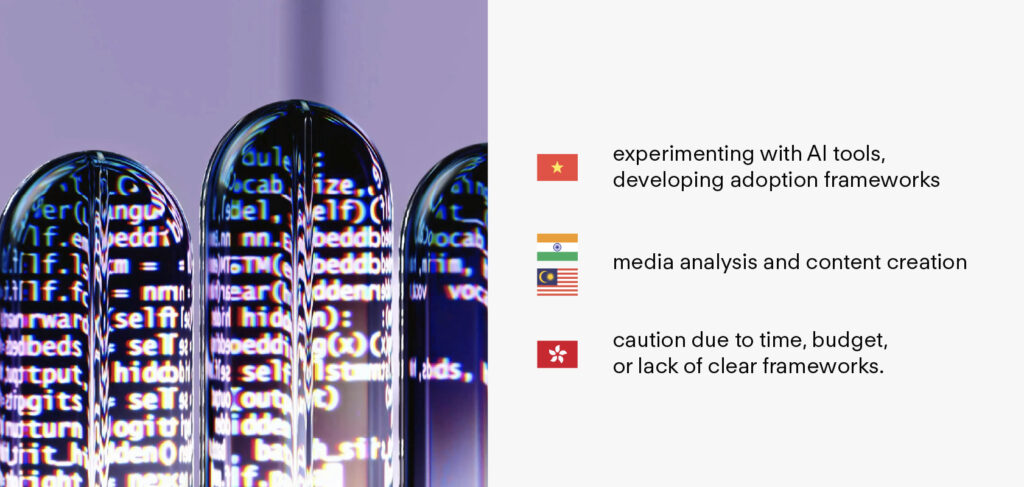
India and Malaysia show broader integration in media analysis and content creation, while Hong Kong demonstrates more caution due to time, budget, or lack of clear frameworks. Vietnam’s position among the more optimistic markets suggests PR professionals there are actively experimenting with AI tools, though strategic adoption frameworks are still developing.
However, a critical gap exists between awareness and strategic adoption. Many professionals understand AI’s potential but haven’t fully integrated it into planning or decision-making processes. AI use often remains individual rather than institutionally guided, lacking formal frameworks or training programs.
Role transformation: From executor to strategic advisor
Perhaps the most significant finding concerns how professional roles are evolving. As AI automates repetitive work like monitoring, data collection, content drafting, higher-order PR skills become increasingly essential: storytelling, strategic thinking, ethical decision-making, and stakeholder interpretation.
Marketing Communications teams lead in active experimentation, using AI for campaign ideation and content personalization. Corporate Communications departments take a more strategic approach, applying AI for sentiment tracking and stakeholder engagement. Digital and analytics teams are embedding AI deeper into automation and performance monitoring.
The three major challenges
1. Technology adoption
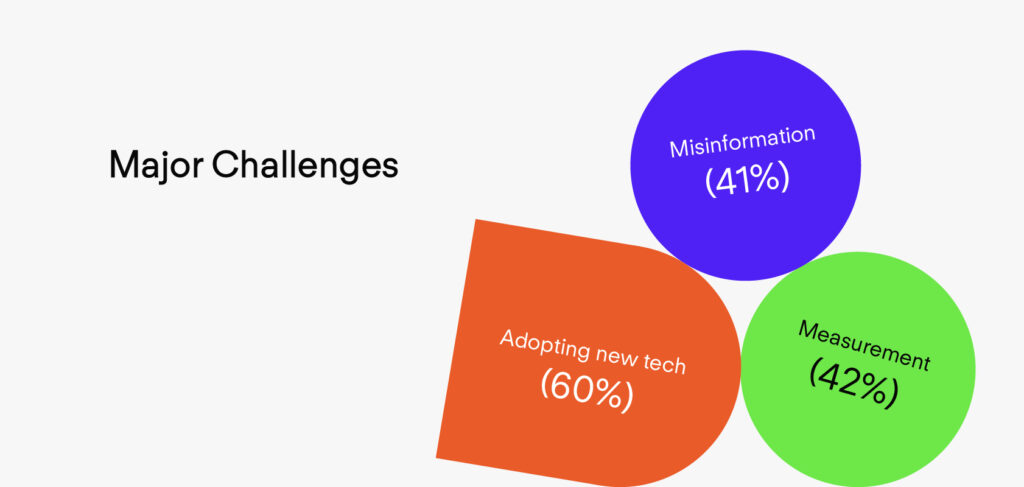
60% of respondents cited adopting AI and new technology as their top concern over the next two years. This reflects the reality that while communicators are enthusiastic about AI’s potential, many struggle with the speed, structure, and cost of implementation.
2. Measurement evolution
Measuring communication ranks as the second major concern at 42%. Traditional metrics such as media impressions, article counts, event attendance, no longer capture the full picture in an AI-indexed world where reputation is shaped as much by algorithmic visibility as by journalist coverage.
As audiences increasingly consume information filtered through AI-powered platforms, PR professionals must ensure their content is reliable, structured, and optimized for these systems. This means treating search optimization and data transparency as fundamental storytelling responsibilities.
3. Misinformation management
Managing misinformation emerges as the third top concern at 41%, reflecting growing awareness that AI can amplify both accurate information and misleading content at unprecedented scale.

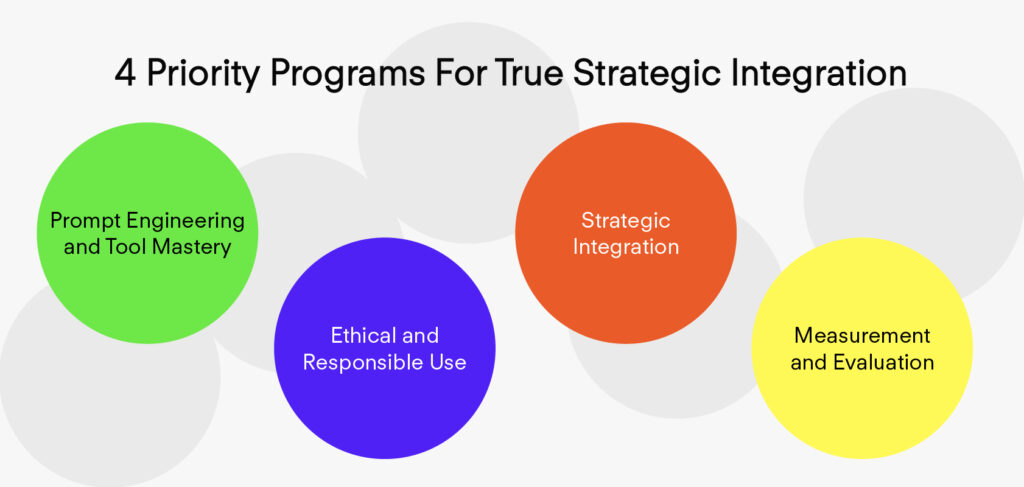
When asked which types of programs would be most beneficial, respondents identified four priorities: Prompt Engineering and Tool Mastery, Ethical and Responsible Use, Strategic Integration, and Measurement and Evaluation. To move beyond basic tool proficiency and advance toward true strategic integration, communicators must deepen both their confidence and their credibility when working with AI. This means shifting from simply understanding how AI functions to learning how AI thinks. The future of AI in communications is no longer about faster outputs; it’s about deeper outcomes.
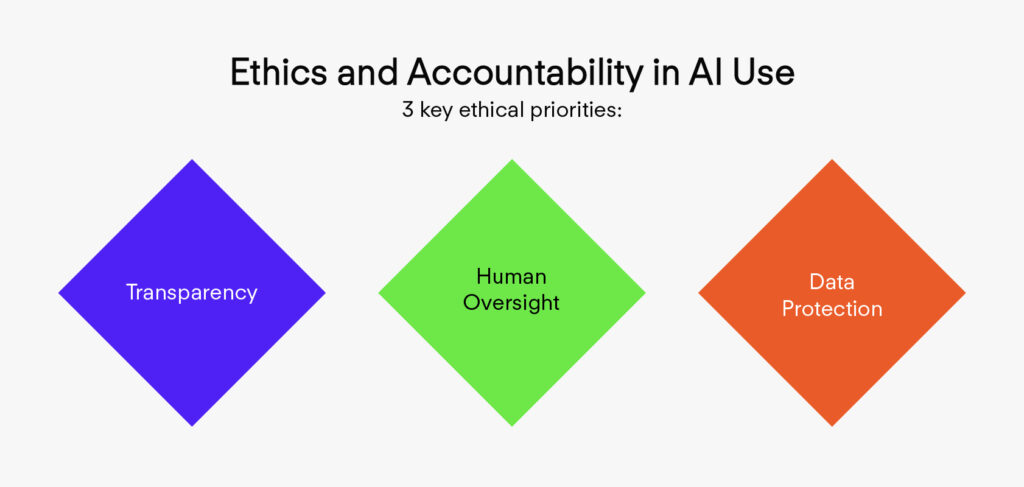
As AI becomes more embedded in communications, ethics and accountability move to the forefront, from bias and misinformation to data privacy. Credibility now hinges not only on what communicators create, but on how responsibly they use AI, pairing innovation with integrity to preserve accuracy and trust.
Conclusion
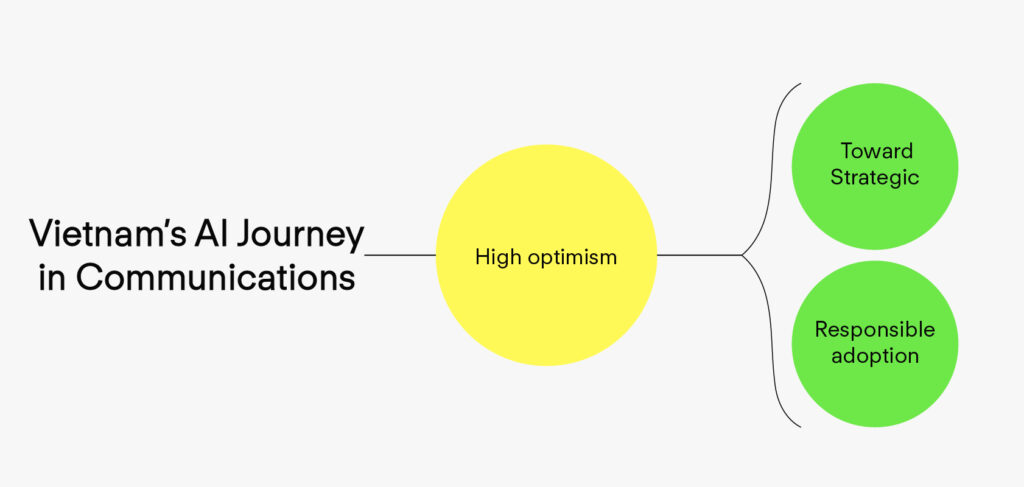
In Vietnam, PR professionals show strong optimism toward AI adoption, placing the market among regional leaders. This momentum is fueled by a fast-growing digital economy and a high openness to experimentation, as communicators increasingly use AI for content creation, trend analysis, and audience engagement. Yet, as in most Asian markets, formal structures for training and governance are still taking shape.
Across the region, one pattern stands out: practitioners must move beyond basic tool usage to mastering how AI enhances strategic thinking and elevates the quality of their counsel. The research points to a clear inflection point. Mature AI integration will require committed leadership, structured training, consistent governance, ethical safeguards, and updated measurement frameworks that reflect AI-driven information environments.
Ultimately, the future of communications in Asia will be defined not by the speed of AI adoption, but by the responsibility and clarity with which it is applied. Communicators who blend technological fluency with ethical and strategic discipline will set the standard, proving that even in an automated era, human expertise remains the core of trust.